L’expérience d’étudiants universitaires ayant agi comme pairs aidants dans le cadre du programme Korsa
DOI :
https://doi.org/10.53967/cje-rce.5741Mots-clés :
soutien par les pairs, pairs aidants, approche d’acceptation et d’engagement, étudiants universitaires, devis qualitatifRésumé
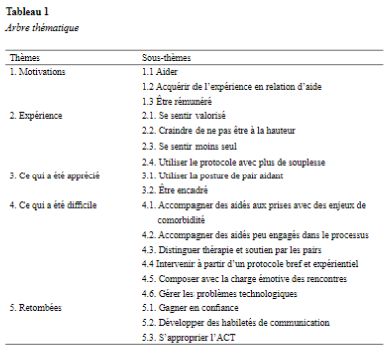
Au cours des dernières années, des établissements postsecondaires ont implanté des programmes de soutien par les pairs afin de promouvoir le mieux-être. Bien que des études aient évalué la portée de ces programmes auprès des aidés, peu de chercheurs se sont intéressés à l’expérience des étudiants qui œuvrent comme pairs aidants. Dans cette étude, l’équipe de recherche a mené un groupe de discussion et des entretiens semi-dirigés afin d’explorer l’expérience de 11 étudiants universitaires ayant agi comme pairs aidants dans le cadre d’un programme de soutien par les pairs offert dans 3 universités montréalaises. Les résultats permettent de mieux comprendre ce qui a motivé les pairs aidants à entreprendre ce programme, leurs inquiétudes, leur expérience, ce qu’ils ont apprécié et trouvé difficile, de même que les retombées qu’a eues le programme pour eux. Cette étude permet aussi de dégager certaines recommandations pour implanter un programme de soutien par les pairs en milieu postsecondaire.
Statistiques
Références
Ali, K., Farrer, L., Gulliver, A. et Griffiths, K. M. (2015). Online peer-to-peer support for young people with mental health problems: A systematic review. JMIR Mental Health, 2(2), article e19. https://doi.org/10.2196/mental.4418
American College Health Association et National College Health Assessment II (ACHA-NCHA II). (2019). Canadian reference group. Executive summary, Spring 2019. https://www.acha.org/documents/ncha/NCHA-II_SPRING_2019_CANADIAN_REFERENCE_GROUP_EXECUTIVE_SUMMARY.pdf
Auerbach, R. P., Alonso, J., Axinn, W. G., Cuijpers, P., Ebert, D. D., Green, J. G., Hwang, I., Kessler, R. C., Liu, H., Mortier, P., Nock, M. K., Pinder-Amaker, S., Sampson, N. A., Aguilar-Gaxiola, S., Al-Hamzawi, A., Andrade, L. H., Benjet, C., Caldas-de-Almeida, J. M., Demyttenaere, K., … Bruffaerts, R. (2016). Mental disorders among college students in the World Health Organization World Mental Health Surveys. Psychological Medicine, 46(14), 2955–2970. https://doi.org/10.1017/S0033291716001665
Beck, A. T. et Beck, R. W. (1972). Screening depressed patients in family practice. A rapid technic. Postgraduate medicine, 52(6), 81–85. https://doi.org/10.1080/00325481.1972.11713319
Bérard, J., Bouchard, J. et Fournier, A.-V. (2021). Enquête courte sur la santé psychologique étudiante au Québec en temps de pandémie de la COVID-19. https://unionetudiante.ca/Media/publicDocuments/Rapport-Enquete-sur-la-Sante-psychologique-COVID-2020.pdf
Bérard, J., Bouchard, J. et Roberge, V. (2019, 9 novembre). Enquête « sous ta façade ». Enquête panquébécoise sur la santé psychologique étudiante, automne 2018. https://unionetudiante.ca/Media/publicDocuments/Rapport-enquete-sous-ta-facade.pdf
Bracke, P., Christiaens, W. et Verhaeghe, M. (2008). Self-esteem, self-efficacy, and the balance of peer support among persons with chronic mental health problems. Journal of Applied Social Psychology, 38(2), 436–459. https://doi.org/10.1111/j.1559-1816.2008.00312.x
Bryan, A. E. B. et Arkowitz, H. (2015). Meta-analysis of the effects of peer-administered psychosocial interventions on symptoms of depression. American Journal of Community Psychology, 55(3‑4), 455–471. https://doi.org/10.1007/s10464-015-9718-y
Byrom, N. (2018). An evaluation of a peer support intervention for student mental health. Journal of Mental Health, 27(3), 240–246. https://doi.org/10.1080/09638237.2018.1437605
Chinman, M., George, P., Dougherty, R. H., Daniels, A. S., Ghose, S. S., Swift, A. et Delphin-Rittmon, M. E. (2014). Peer support services for individuals with serious mental illnesses: Assessing the evidence. Psychiatric Services, 65(4), 429–441. https://doi.org/10.1176/appi.ps.201300244
Ciarrochi, J., Bilich, L. et Godsell, C. (2010). Psychological flexibility as a mechanism of change in acceptance and commitment therapy. Dans R. A. Baer (dir.), Assessing mindfulness and acceptance processes in clients: Illuminating the theory and practice of change (p. 51–76). Context Press.
Crisp, D. A., Rickwood, D., Martin, B. et Byrom, N. (2020). Implementing a peer support program for improving university student wellbeing: The experience of program facilitators. Australian Journal of Education, 64(2), 113–126. https://doi.org/10.1177/0004944120910498
Cyr, C., Mckee, H., O’Hagan, M. et Priest, R. (2016, juillet). Le soutien par les pairs : une nécessité [Rapport] (2e éd.). Commission de la santé mentale du Canada. https://www.mentalhealthcommission.ca/wp-content/uploads/drupal/2016-10/Making_the_Case_for_Peer_Support_2016_Fr.pdf.pdf
Davidson, L., Chinman, M., Sells, D. et Rowe, M. (2006). Peer support among adults with serious mental illness: A report from the field. Schizophrenia Bulletin, 32(3), 443–450. https://doi.org/10.1093/schbul/sbj043
Davies, E. B., Morriss, R. et Glazebrook, C. (2014). Computer-delivered and web-based interventions to improve depression, anxiety, and psychological well-being of university students: A systematic review and meta-analysis. Journal of Medical Internet Research, 16(5), article e130. https://doi.org/10.2196/jmir.3142
Fletcher, L. et Hayes, S. C. (2005). Relational frame theory, acceptance and commitment therapy, and a functional analytic definition of mindfulness. Journal of Rational-Emotive & Cognitive-Behavior Therapy, 23(4), 315–336. https://doi.org/10.1007/s10942-005-0017-7
Grégoire, S., Beaulieu, F., Lachance, L., Bouffard, T., Vezeau, C. et Perreault, M. (2022). An online peer support program to improve mental health among university students: A randomized controlled trial. Journal of American College Health, 1–13. https://doi.org/10.1080/07448481.2022.2099224
Grégoire, S., Lachance, L., Bouffard, T. et Dionne, F. (2018). The use of acceptance and commitment therapy to promote mental health and school engagement in university students: A multisite randomized controlled trial. Behavior Therapy, 49(3), 360–372. https://doi.org/10.1016/j.beth.2017.10.003
Grégoire, S., Lachance, L., Bouffard, T., Hontoy, L.-M. et De Mondehare, L. (2016). L’efficacité de l’approche d’acceptation et d’engagement en regard de la santé psychologique et de l’engagement scolaire des étudiants universitaires. Revue canadienne des sciences du comportement, 48(3), 222–231. https://doi.org/10.1037/cbs0000040
Guest, G., Namey, E. et McKenna, K. (2017). How many focus groups are enough? Building an evidence base for nonprobability sample sizes. Field Methods, 29(1), 3–22. https://doi.org/10.1177/1525822X16639015
Haeger, J. A., Davis, C. H. et Levin, M. E. (2020). Utilizing ACT daily as a self-guided app for clients waiting for services at a college counseling center: A pilot study. Journal of American College Health, 70(3), 742–749. https://doi.org/10.1080/07448481.2020.1763366
Hayes, S. C. et Hofmann, S. G. (2017). The third wave of cognitive behavioral therapy and the rise of process-based care. World Psychiatry, 16(3), 245–246. https://doi.org/10.1002/wps.20442
Hayes, S. C., Strosahl, K. D. et Wilson, K. G. (2012). Acceptance and commitment therapy: The process and practice of mindful change (2e éd.). Guilford Press.
John, N. M., Page, O., Martin, S. C. et Whittaker, P. (2018). Impact of peer support on student mental wellbeing: A systematic review. MedEdPublish, 7, Article 170. https://doi.org/10.15694/mep.2018.0000170.1
Johnson, B. A. et Riley, J. B. (2021). Psychosocial impacts on college students providing mental health peer support. Journal of American College Health, 69(2), 232–236. https://doi.org/10.1080/07448481.2019.1660351
Johnson, W. B. (2002). The intentional mentor: Strategies and guidelines for the practice of mentoring. Professional Psychology: Research and Practice, 33(1), 88–96. https://doi.org/10.1037/0735-7028.33.1.88
Kroenke, K. et Spitzer, R. L. (2002). The PHQ-9: A new depression diagnostic and severity measure. Psychiatric Annals, 32(9), 509–515. https://doi.org/10.3928/0048-5713-20020901-06
L’Écuyer, R. (1987). L’analyse de contenu : notion et étapes. Dans J.-P. Deslauriers (dir.), Les méthodes de la recherche qualitative (p. 49–65). Presses de l’Université du Québec.
Levin, M. E., Haeger, J. A., Pierce, B. G. et Twohig, M. P. (2017). Web-based acceptance and commitment therapy for mental health problems in college students: A randomized controlled trial. Behavior Modification, 41(1), 141–162. https://doi.org/10.1177/0145445516659645
Linden, B. et Stuart, H. (2020). Post-secondary stress and mental well-being: A scoping review of the academic literature. Canadian Journal of Community Mental Health, 39(1), 1–32. https://doi.org/10.7870/cjcmh-2020-002
Ministère de l’Enseignement supérieur (MES). (2021). Plan d’action sur la santé mentale étudiante en enseignement supérieur 2021–2026. https://cdn-contenu.quebec.ca/cdn-contenu/adm/min/education/publications-adm/enseignement-superieur/PASME.pdf
Mirabel-Sarron, C. et Docteur, A. (2021). Leçon 9. L’activation comportementale. Dans C. Mirabel-Sarron et A. Docteur (dir.), Apprendre à soigner les dépressions avec les thérapies comportementales et cognitives (p. 164–177). Dunod.
Paillé, P. et Mucchielli, A. (2016). L’analyse qualitative en sciences humaines et sociales. Armand Colin. https://doi.org/10.3917/arco.paill.2016.01
Perreault, M., Bouchard, S., Lapalme, M., Laverdure, A., Audet, D., Cusson, J.-C., Zacchia, C., Milton, D., Sam Tion, M., Chartier-Otis, M., Marchand, A. et Bélanger, C. (2015). Perspective de pairs aidants sur leur expérience d’animation d’un programme d’autotraitement du trouble panique. Santé mentale au Québec, 40(1), 35–51. https://doi.org/10.7202/1032381ar
Räsänen, P., Lappalainen, P., Muotka, J., Tolvanen, A. et Lappalainen, R. (2016). An online guided ACT intervention for enhancing the psychological wellbeing of university students: A randomized controlled clinical trial. Behaviour Research and Therapy, 78, 30–42. https://doi.org/10.1016/j.brat.2016.01.001
Ratzlaff, S., McDiarmid, D., Marty, D. et Rapp, C. (2006). The Kansas Consumer as Provider program: Measuring the effects of a supported education initiative. Psychiatric Rehabilitation Journal, 29(3), 174–182. https://doi.org/10.2975/29.2006.174.182
Repper, J. et Carter, T. (2011). A review of the literature on peer support in mental health services. Journal of Mental Health, 20(4), 392–411. https://doi.org/10.3109/09638237.2011.583947
Roberge, M.-C. et Déplanche, F. (2017, juin). Synthèse des connaissances sur les champs d’action pertinents en promotion de la santé mentale chez les jeunes adultes. Institut national de santé publique du Québec (INSPQ). https://www.inspq.qc.ca/sites/default/files/publications/2283_connaissances_champs_action_promotion_sante_mentale_jeunes_adultes.pdf
Salzer, M. S. et Shear, S. L. (2002). Identifying consumer-provider benefits in evaluations of consumer-delivered services. Psychiatric Rehabilitation Journal, 25(3), 281–288. https://doi.org/10.1037/h0095014
Salzer, M. S., Wick, L. C. et Rogers, J. A. (2008). Familiarity with and use of accommodations and supports among postsecondary students with mental illnesses. Psychiatric Services, 59(4), 370–375. https://doi.org/10.1176/ps.2008.59.4.370
Savage, H., Murray, J., Hatch, S. L., Hotopf, M., Evans-Lacko, S. et Brown, J. S. L. (2016). Exploring professional help-seeking for mental disorders. Qualitative Health Research, 26(12), 1662–1673. https://doi.org/10.1177/1049732315591483
Schwenk, T. L., Davis, L. et Wimsatt, L. A. (2010). Depression, stigma, and suicidal ideation in medical students. Journal of the American Medical Association, 304(11), 1181–1190. https://doi.org/10.1001/jama.2010.1300
Spitzer, R. L., Kroenke, K., Williams, J. B. et Löwe, B. (2006). A brief measure for assessing generalized anxiety disorder: The GAD-7. Archives of Internal Medicine, 166(10), 1092–1097. https://doi.org/10.1001/archinte.166.10.1092
Wiens, K., Bhattarai, A., Dores, A., Pedram, P., Williams, J. V. A., Bulloch, A. G. M. et Patten, S. B. (2020). Mental health among Canadian postsecondary students: A mental health crisis? The Canadian Journal of Psychiatry, 65(1), 30–35. https://doi.org/10.1177/0706743719874178
Téléchargements
Publié-e
Comment citer
Numéro
Rubrique
Licence
© Société canadienne pour l'étude de l'éducation 2022

Cette œuvre est sous licence Creative Commons Attribution - Pas d'Utilisation Commerciale - Pas de Modification 4.0 International.
La Revue canadienne de l’éducation utilise la licence CC BY-NC-ND de Creative Commons.