Bridging Local Concerns and Systemic Change: A Design-Based Approach to Transformative Climate Education
DOI :
https://doi.org/10.53967/cje-rce.7205Mots-clés :
apprentissage des adultes, éducation climatique transformatrice, modernité coloniale, recherche fondée sur la conceptionRésumé
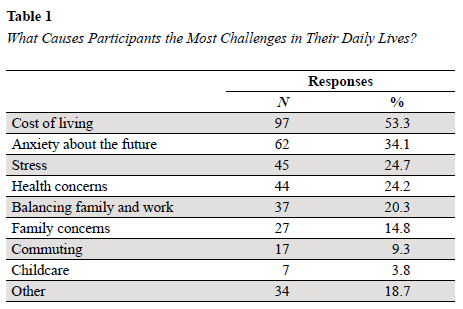
Cet article présente les premières phases de recherche et de développement d’un programme d’éducation climatique transformatrice destiné aux adultes dans une communauté semi-rurale du sud de l’île de Vancouver. En utilisant une approche de recherche fondée sur la conception (design-based research [DBR]), nous avons développé une série d’ateliers inspirés de l’éducation des adultes et de l’éducation permanente (adult and lifelong education [ALE]), de l’apprentissage transformateur et des cadres théoriques du collectif Gesturing Towards Decolonial Futures et de Vanessa Machado de Oliveira (2022). Notre recherche a commencé par une évaluation des besoins communautaires (n = 183), identifiant des préoccupations majeures, comme l’accessibilité financière, l’écoanxiété et la cohésion sociale. Nous formulons six principes de conception issus de ces résultats, soulignant l’importance des points d’entrée pédagogiques, du rôle de la transformation des visions du monde et de l’intégration de solutions climatiques locales dans une critique systémique plus large. Cette étude contribue à l’éducation climatique en proposant un modèle qui dépasse la simple diffusion d’informations et favorise plutôt un engagement critique et axé sur la justice en matière d’action climatique, à la fois pertinent à l’échelle locale et inscrit dans un contexte global.
Statistiques
Références
Ballard, H., & Bratosin, T. (2024). Why local action is crucial to addressing global climate change. World Economic Forum. https://www.weforum.org/stories/2024/08/local-action-crucial-to-global-climate-change/
Cornish, F., Breton, N., Moreno-Tabarez, U., Delgado, J., Rua, M., de-Graft Aikins, A., & Hodgetts, D. (2023). Participatory action research. Nature Reviews Methods Primers, 3(1). https://doi.org/10.1038/s43586-023-00214-1
District of Sooke. (2022). Sooke 2030: Climate action plan. https://sooke.ca/wp-content/uploads/2022/12/Climate_Action_Plan-Final_12-Dec.pdf
González-Gaudiano, E., & Meira-Cartea, P. (2010). Climate change education and communication: A critical perspective on obstacles and resistance. In F. Kagaway & D. Selby (Eds.), Education and climate change: Living and learning in interesting times (pp. 13–34). Routledge.
How the information deficit model helps create unidirectional and paternalistic mode of healthcare communication. (2018). Journal of Communication in Healthcare, 11(4), 239–240. https://doi.org/10.1080/17538068.2018.1567026
Intergovernmental Panel on Climate Change. (2022). Summary for policymakers. In H.-O. Pörtner, D. C. Roberts, E. S. Poloczanska, K. Mintenbeck, M. Tignor, A. Alegría, M. Craig, S. Langsdorf, S. Löschke, V. Möller, & A. Okem (Eds.), Climate change 2022: Impacts, adaptation, and vulnerability. Working group II contribution to the sixth assessment report of the intergovernmental panel on climate change (pp. 3–36). Cambridge University Press. https://www.ipcc.ch/report/ar6/wg2/downloads/report/IPCC_AR6_WGII_FullReport.pdf
Lange, E. A. (2023). Transformative sustainability education: Reimagining our future. Routledge.
Lange, E. A. (2024). A transition imagination for higher education leaders: Towards relationality. In M. Drinkwater & Y. Waghid (Eds.), The Bloomsbury handbook of ethics of care in transformative leadership in higher education (pp. 254–277). Bloomsbury Publishing.
Lawrence, M., Homer-Dixon, T., Janzwood, S., Rockstöm, J., Renn, O., & Donges, J. F. (2024). Global polycrisis: The causal mechanisms of crisis entanglement. Global Sustainability, 7(e6), 1–16. https://doi.org/10.1017/sus.2024.1
Machado de Oliveira, V. (2022). Hospicing modernity: Facing humanity’s wrongs and the implications for social activism. Penguin Random House.
Marschütz, B., Bremer, S., Runhaar, H., Hegger, D., Mees, H., Vervoort, J., & Wardekker, A. (2020). Local narratives of change as an entry point for building urban climate resilience. Climate Risk Management, 28, 100223. https://doi.org/10.1016/j.crm.2020.100223
Mayer, A., & Smith, E. K. (2018). Unstoppable climate change? The influence of fatalistic beliefs about climate change on behavioural change and willingness to pay cross-nationally. Climate Policy, 19(4), 511–523. https://doi.org/10.1080/14693062.2018.1532872
Merrill, M. D. (2002). First principles of instruction. Education Technology, Research and Development, 50(3), 43–59. https://doi.org/10.1007/BF02505024
Mezirow, J. (1991). Transformative dimensions of adult learning. Jossey-Bass.
Mundy, K., & Murphy, K. (2006). Transnational advocacy, global civil society? Emerging evidence from the field of education. In H. Lauder, P. Brown, J. Dillabough, and A. H. Halsey (Eds.), Education, globalization & social change (pp. 991–1015). Oxford University Press.
National Oceanic and Atmospheric Administration. (n.d.). Climate change impacts. Retrieved February 12, 2025, from https://www.noaa.gov/education/resource-collections/climate/climate-change-impacts
Olson, K. (2009). Wounded by school. Teachers College Press.
Shor, I. (1992). Empowering education. University of Chicago Press.
da Silva, D. F. (2014). Toward a Black feminist poethics: The quest(ion) of Blackness toward the end of the world. The Black Scholar, 44(2), 81–97. https://www.jstor.org/stable/10.5816/blackscholar.44.2.0081
Spencer, B., & Lange, E. (2014). The purposes of adult education: An introduction. Thompson Educational Publishing.
Statistics Canada. (2023). Census profile, 2021 census of population [Statistics Canada Catalogue no. 98-316-X2021001]. https://www12.statcan.gc.ca/census-recensement/2021/dp-pd/prof/details/page.cfm?Lang=E&SearchText=Sooke&DGUIDlist=2021A00055917052&GENDERlist=1,2,3&STATISTIClist=1&HEADERlist=0
Stein, S., Andreotti, V., Suša, R., Ahenakew, C., & Čajková, T. (2020). From “education for sustainable development” to “education for the end of the world as we know it.” Educational Philosophy and Theory, 54(3), 274–287. https://doi.org/10.1080/00131857.2020.1835646
Stein, S., Hunt, D., Suša, R., & de Oliveira Andreotti, V. (2017). The educational challenge of unraveling the fantasies of ontological security. Diaspora, Indigenous, and Minority Education, 11(2), 69–79. http://dx.doi.org/10.1080/15595692.2017.1291501
Sterling, S. (1996). Education for sustainability. Earthscan.
Sterling, S. (2024). Learning and sustainability in dangerous times. Agenda Publishing.
UNESCO. (2021). Reimagining our futures together: A new social contract for education. UNESCO Publishing. https://unesdoc.unesco.org/ark:/48223/pf0000379707.locale=en
Wang, F., & Hannafin, M. J. (2005). Design-based research and technology-enhanced learning environments. Educational Technology Research and Development, 53(4), 5–23. https://doi.org/10.1007/BF02504682
Téléchargements
Publié-e
Comment citer
Numéro
Rubrique
Licence
© Société canadienne pour l'étude de l'éducation 2025

Cette œuvre est sous licence Creative Commons Attribution - Pas d'Utilisation Commerciale - Pas de Modification 4.0 International.
La Revue canadienne de l’éducation utilise la licence CC BY-NC-ND de Creative Commons.